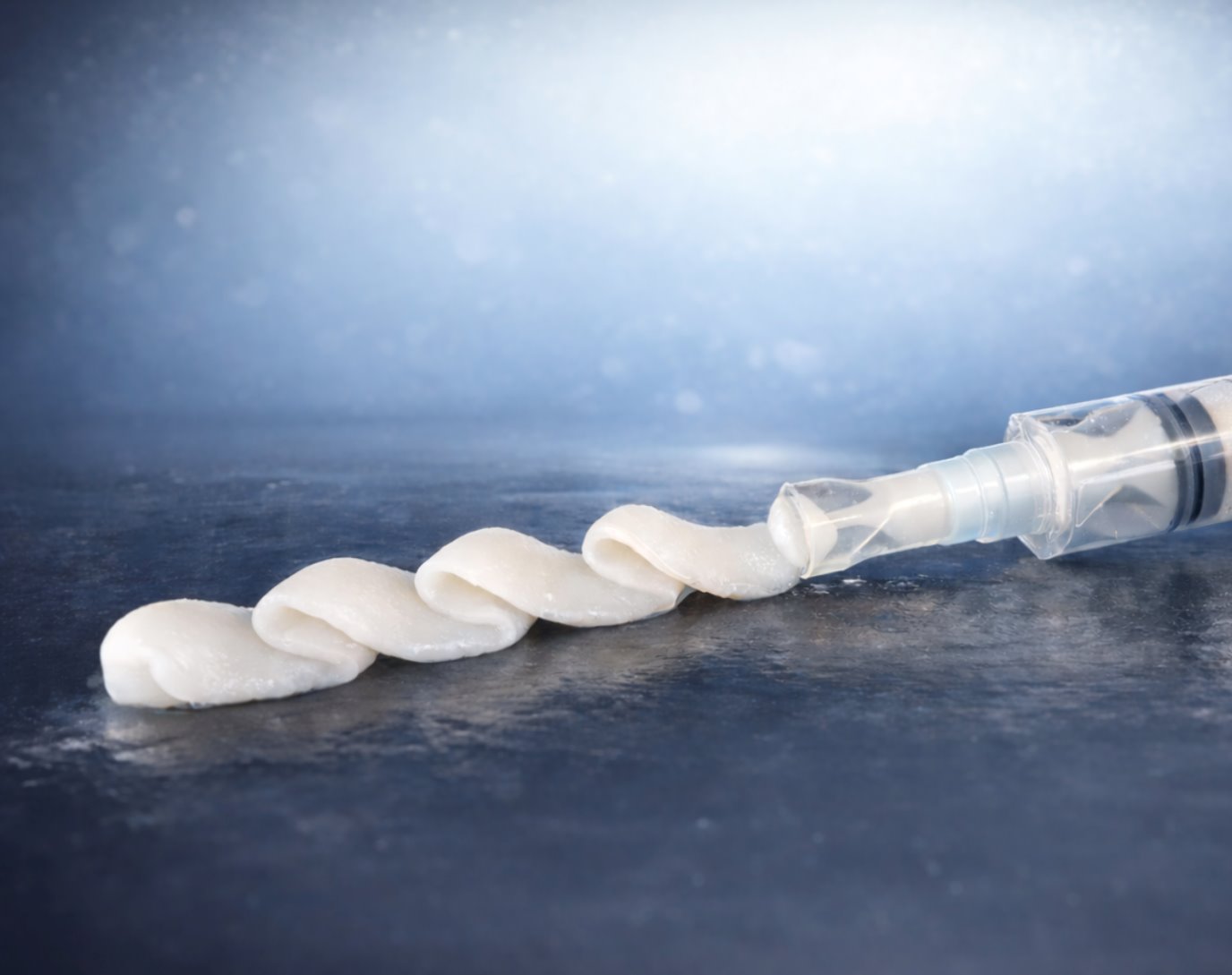
ECMT Hydrogel

ECMT's Patented Hydrogels

ECM hydrogels are injectable biomaterials created from decellularized extracellular matrix.

When processed into hydrogel form, our material retains native ECM components that are conducive to constructive tissue remodeling.

Today, ECM-based materials are widely used in wound care, reconstructive surgery, and soft tissue repair, where they act as a biologic scaffold that supports cell attachment, recruits the body's own repair cells, and helps guide the formation of new, functional tissue.
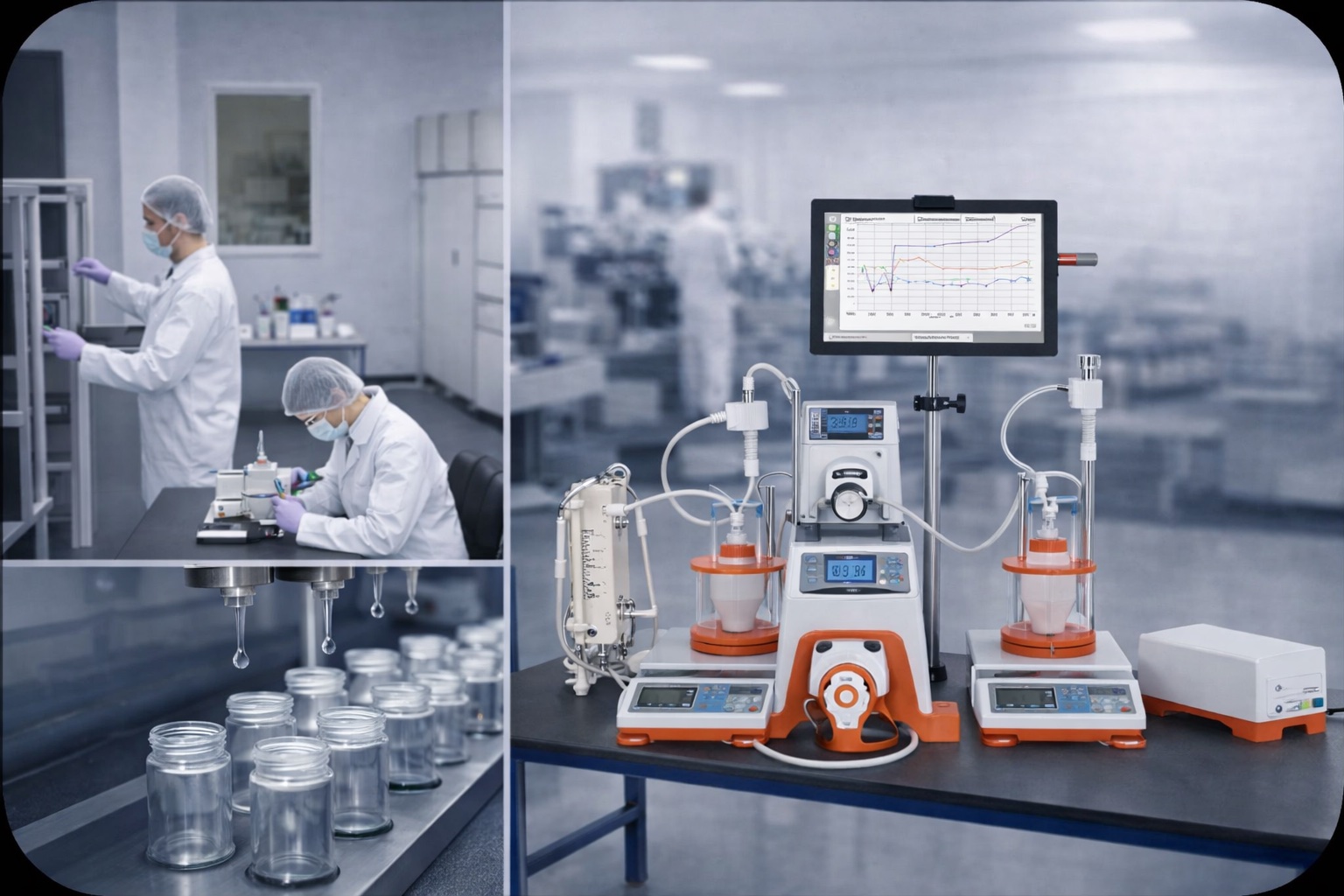
ECMT Laboratory Research

ECMT's Proprietary Matrix-Bound Nanovesicles

Matrix bound nanovesicles (MBV) are naturally occurring vesicles embedded within the extracellular matrix.

Unlike free-circulating exosomes, MBV remain sequestered within the matrix and are released during matrix remodeling.

Carrying bioactive cargo, MBV are biologics that modulate the immune response, influence cellular differentiation, and support tissue repair pathways. Their nanometer-scale size enables precise delivery of a potent ECM signaling package into confined spaces, irregular geometries, and delicate wound sites such as the cornea.

The Healing Story

Our company focuses on wounds that fail conventional treatment because of access, geometry, or tissue sensitivity. Instead of overriding biology, we restore it:

Injury or disease disrupts tissue architecture and ECM integrity

Cells lose proper environmental signaling

Inflammation persists and healing stalls

ECM biomaterials restore structural and biochemical cues

Cells respond appropriately—inflammation resolves, tissue healing proceeds

30+ Years of Research

Extensive preclinical studies, peer-reviewed publications, and clinical experience with ECM-based materials provide our foundation.

February 6, 2025 • Tissue Engineering Part A

Matrix-Bound Nanovesicles Promote Prohealing Immunomodulation Without Immunosuppression

Capella-Monsonís et al.

May 19, 2023 • Science Advances

Mitigation of influenza-mediated inflammation by immunomodulatory matrix-bound nanovesicles

Crum et al.

November 22, 2022 • Science Advances

Biocompatibility and biodistribution of matrix-bound nanovesicles in vitro and in vivo

Crum et al.

November 8, 2022 • Tissue Engineering Part A

Matrix Bound Nanovesicles Have Tissue-Specific Characteristics That Suggest a Regulatory Role

Turner et al.

October 13, 2022 • Tissue Engineering Part A

Transcriptomic Regulation of Macrophages by Matrix-Bound Nanovesicle-Associated Interleukin-33

Cramer et al.

October 11, 2022 • Tissue Engineering Part A

Transcriptomic, Proteomic, and Morphologic Characterization of Healing in Volumetric Muscle Loss

Crum et al.

February 22, 2022 • Nature Regenerative Medicine

Immunomodulatory matrix-bound nanovesicles mitigate acute and chronic pristane-induced rheumatoid arthritis

Crum et al.

February 21, 2022 • Oncotarget

A liquid fraction of extracellular matrix inhibits glioma cell viability in vitro and in vivo

Murdock et al.

January 29, 2022 • ScienceDirect Elsevier

Mapping the acute time course of immune cell infiltration into an ECM hydrogel in a rat model of stroke using 19F MRI

Modo et al.

December 22, 2020 • Journal of Immunology and Regenerative Medicine

The effect of normal, metaplastic, and neoplastic esophageal extracellular matrix upon macrophage activation

Saldin et al.

December 8, 2020 • ScienceDirect Elsevier

ECM hydrogel improves the delivery of PEG microsphere-encapsulated neural stem cells and endothelial cells into tissue cavities caused by stroke

Ghuman et al.

October 19, 2020 • Tissue Engineering

Matrix-Bound Nanovesicles: The Effects of Isolation Method upon Yield, Purity, and Function

Quijano et al.

July 9, 2020 • The Journal of Clinical Investigation

Graft IL-33 regulates infiltrating macrophages to protect against chronic rejection

Li et al.

July 1, 2020 • Science Advances

Esophageal extracellular matrix hydrogel mitigates metaplastic change in a dog model of Barrett's esophagus

Naranjo et al.

March 20, 2020 • Science Advances

Lipidomics and RNA sequencing reveal a novel subpopulation of nanovesicle within extracellular matrix biomaterials

Hussey et al.

March 5, 2019 • Nature Scientific Reports

Matrix-bound nanovesicles prevent ischemia-induced retinal ganglion cell axon degeneration and death and preserve visual function

van der Merwe et al.

February 1, 2019 • Journal of Immunology and Regenerative Medicine

Matrix bound nanovesicle-associated IL-33 activates a pro-remodeling macrophage phenotype via a non-canonical, ST2-independent pathway

Hussey et al.

December 26, 2018 • Journal of Immunology and Regenerative Medicine

Comparison of the host macrophage response to synthetic and biologic surgical meshes used for ventral hernia repair

Pineda Molina et al.

October 15, 2018 • Acta Biomaterialia

Biodegradation of ECM hydrogel promotes endogenous brain tissue restoration in a rat model of stroke

Ghuman et al.

October 12, 2018 • Tissue Engineering

Human testis extracellular matrix enhances human spermatogonial stem cell survival in vitro

Murdock et al.

September 28, 2018 • The Journal of Thoracic and Cardiovascular Surgery

Cytocompatibility and mechanical properties of surgical sealants for cardiovascular applications

Murdock et al.

September 27, 2018 • Tissue Engineering

Extracellular matrix degradation products downregulate neoplastic esophageal cell phenotype

Saldin et al.

May 29, 2018 • Nature Reviews Materials

Extracellular matrix-based materials for regenerative medicine

Hussey et al.

September 10, 2016 • Journal of Crohn's and Colitis

Restoring Mucosal Barrier Function and Modifying Macrophage Phenotype with an Extracellular Matrix Hydrogel: Potential Therapy for Ulcerative Colitis

Keane et al.

July 21, 2016 • npj Regenerative Medicine

An acellular biologic scaffold treatment for volumetric muscle loss: results of a 13-patient cohort study

Dziki et al.

June 10, 2016 • Science Advances

Matrix-bound nanovesicles within ECM bioscaffolds

Huleihel et al.

August 12, 2015 • Tissue Engineering

Tissue-Specific Effects of Esophageal Extracellular Matrix

Keane et al.

March 28, 2011 • Tissue Engineering

Esophageal Preservation in Five Male Patients After Endoscopic Inner-Layer Circumferential Resection in the Setting of Superficial Cancer: A Regenerative Medicine Approach with a Biologic Scaffold

Badylak et al.